
Acquiring and agentic E-commerce in 2026
- Acquiring and agentic ecommerce: the operational guide to selling more in 2026
- What acquiring and agentic ecommerce are and why they define your business profitability
- The real impact of acquiring and agentic ecommerce on conversion, cash flow, and margin
- Technical architecture: how acquiring and agentic ecommerce work behind the scenes
- Regulatory compliance: PSD2, PCI DSS, 3DS and fraud prevention
- Acquiring and agentic ecommerce in action: sector‑specific use cases
- PayFac vs. traditional models: why premium acquiring is the best option
- Conclusion and next step
- Legal and regulatory framework
Acquiring and agentic ecommerce: the operational guide to selling more in 2026
Your business loses money every day due to avoidable declines. I’m not talking about pennies: I’m talking about 5% to 15% of your revenue evaporating because of a poorly configured payment infrastructure, static routing, and a payment gateway that doesn’t speak the language of local issuing banks.
On top of that loss comes a paradigm shift that is already here: agentic ecommerce. AI agents buy, negotiate, and execute transactions without human intervention. If your store isn’t prepared to process M2M (machine‑to‑machine) transactions with the same reliability as human‑initiated ones, you will lose market share to competitors who are.
In this guide you will master:
- What acquiring and agentic ecommerce are and why they define your net margin.
- How the technical architecture works behind the scenes, with real data flows.
- The European regulatory framework you must comply with (PSD2, PCI DSS 4.0, 3DS2).
- Why acquiring with a PayFac model outperforms traditional aggregators.

What acquiring and agentic ecommerce are and why they define your business profitability
Acquiring is not a banking formality. It is the financial and technological service that allows your business to accept card payments, connect to global networks like Visa, MC and Amex, process authorizations, manage fraud risk, and settle funds into your bank account. Without well‑structured acquiring, every sale is a gamble.
Technical definition: what a payments architect understands
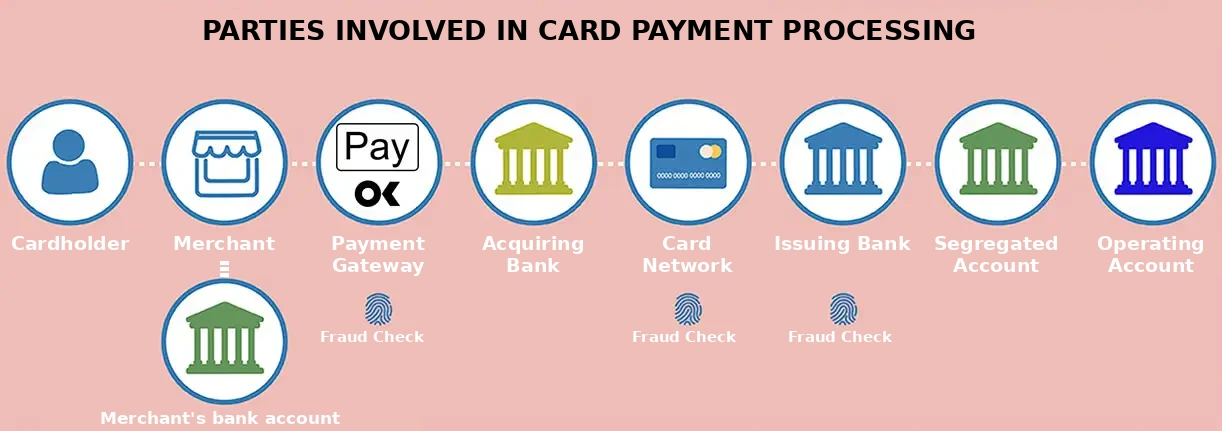
From an infrastructure perspective, acquiring involves an ISO 8583 messaging flow between four parties: the cardholder, the issuing bank, the card network, and the acquiring bank or institution. Each authorization message travels in milliseconds. The acquirer captures the transaction data, formats it according to the issuer’s specifications, routes the request through the path with the highest approval probability, and manages the response.
When we talk about agentic ecommerce, we add a new layer: the buyer is no longer a human with a browser, but an autonomous AI agent executing purchases on behalf of a user. These agents operate through structured APIs, consume product metadata, and require real‑time authorization responses with no visual interface.
Business definition: what matters to the CFO
For treasury management, acquiring determines how much of what you sell you actually collect—and when you collect it. The effective acquiring cost for a merchant in Spain ranges between 0.40% and 3% depending on operational risk. Every basis point gained in conversion rate or every day gained in settlement speed directly impacts your working capital.
Agentic commerce multiplies this impact: autonomous purchases executed by AI agents eliminate cart friction, but require your infrastructure to respond to a machine with the same reliability as to a human.
The real impact of acquiring and agentic ecommerce on conversion, cash flow, and margin
Payment infrastructure is no longer a simple data pipeline. In a market where retail margins are increasingly thin, gaining fractions of a percentage point in authorization rate determines business survival.
Industry data and operational benchmarks
Digital payment volume in Spain exceeded €250 billion in annual transactions (Bank of Spain data). By 2029, global projections place the market above 3.5 billion non‑cash transactions per year. All that massive capital flow requires intelligent routing and flawless settlement.
As a regulated entity, we have measured that merchants migrating from static to dynamic routing experience improvements of 2 to 8 percentage points in approval rate, depending on sector, issuer mix, and average ticket size.
How modern acquiring reduces cart abandonment
A technical decline is not just a lost sale. It is a frustrated customer who will go to the nearest competitor. The most common causes of avoidable declines include:
- Incorrect data format: the message does not meet the local issuer’s specifications.
- Suboptimal routing: sending a cross‑border transaction to a processor that does not understand the issuer’s nuances.
- Lack of intelligent retries: when a payment fails due to a temporary issuer outage, the system does not redirect to another node.
In the agentic context, the impact is even greater. An AI agent that receives a decline does not wait, reload the page, or try another card. It abandons instantly and finds another provider in milliseconds.
Direct effect on the merchant’s cash flow
Settlement speed makes the difference between having capital available on D+1 or waiting until D+7. With acquiring through a payment facilitator, funds move from the card network to the merchant’s account without additional intermediaries. This allows earlier reinvestment, better supplier negotiation, and reduced reliance on credit lines.
Merchants using AI‑based dynamic routing recover between 2 and 8 approval‑rate points. For a business generating €1,000,000 annually, that equals €20,000 to €80,000 in recovered revenue previously lost to avoidable declines.
Technical architecture: how acquiring and agentic ecommerce work behind the scenes
Understanding the internal architecture of payment processing is not an academic exercise. It is what allows you to demand the capabilities you truly need from your provider and detect bottlenecks before they cost you money.
Step‑by‑step data flow
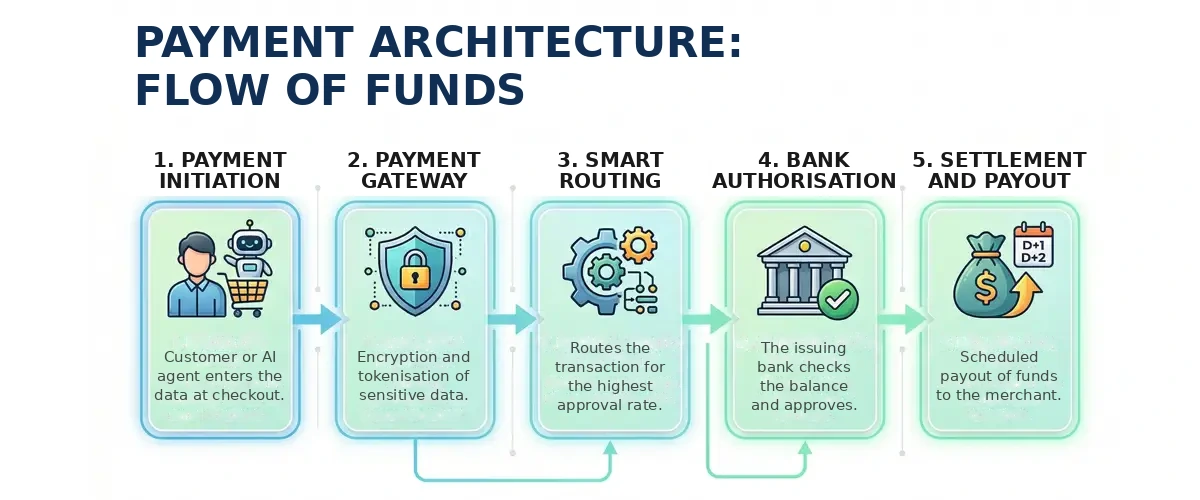
When a buyer (human or AI agent) initiates a payment, the flow follows this sequence:
- The customer enters card data at checkout (or the AI agent sends it via API).
- The payment gateway tokenizes the sensitive data and encrypts the message.
- The intelligent routing engine evaluates in milliseconds the issuer’s historical performance, network latency, and approval probability by route.
- The authorization request is sent to the issuing bank through the card network (Visa or Mastercard).
- The issuer verifies balance, risk, and strong customer authentication (SCA). It responds with approval or decline.
- If approved, the transaction is confirmed to the merchant and settlement is scheduled.
- On D+1 or D+2, the acquirer submits the charge to the network for clearing and payout to the merchant.
API integrations and infrastructure requirements
The technical integration between the merchant and the acquiring institution is carried out through APIs that must meet strict latency, availability, and security requirements.
REST vs. SDK: when to use each one
REST API is the right choice when your platform is fully custom or you need complete control over the data flow. It allows you to customize every field in the authorization message and manage retries with your own logic.
SDKs (software development kits) are the fast‑track option for standard platforms like WooCommerce, Shopify or Magento. They reduce integration time from weeks to days and minimize PCI DSS scope by encapsulating the capture of sensitive data.
For agentic ecommerce, the REST API is essential. AI agents require structured endpoints with predictable responses, sub‑300 ms response times, and machine‑readable documentation.
Webhooks and event management
Webhooks are real‑time notifications your system receives when the status of a transaction changes (authorized, captured, declined, refunded). In an agentic model, webhooks are the primary communication channel between your infrastructure and the AI agents handling purchases.
A correct configuration includes:
- Cryptographic signature validation on every notification received.
- Retry queues with exponential backoff for handling failed events.
- Idempotency guarantees to prevent duplicate charges and data redundancy.
Security layers in the process
Every transaction passes through multiple protection layers: tokenization (replacing the real PAN with a token useless outside the system), TLS encryption in transit, cryptogram validation in tokenized payments, and real‑time risk analysis with AI‑based scoring. The combination of these layers reduces the attack surface without adding visible friction for the buyer.
Regulatory compliance: PSD2, PCI DSS, 3DS and fraud prevention
We know that technological innovation must operate on unbreakable regulatory foundations. Transaction processing requires strict compliance—there is no negotiation.
Obligations under PSD2 and SCA
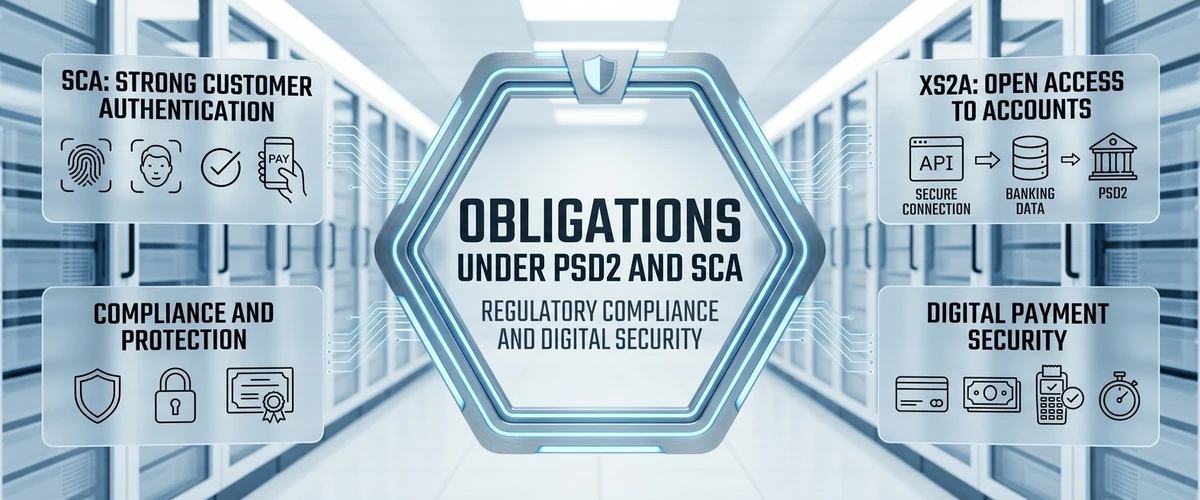
The Payment Services Directive 2 (PSD2), transposed in Spain through Royal Decree‑Law 19/2018, requires Strong Customer Authentication (SCA) for most electronic payments. SCA requires verifying at least two of three factors: something the user knows (PIN), something they possess (device), and something they are (biometrics).
There are legitimate exemptions that reduce friction without violating the law: low‑value transactions (under €30), low‑risk recurring payments, and transactions where the acquirer’s risk analysis (TRA) confirms a fraud level below the threshold set by the European Banking Authority (EBA).
In the agentic context, SCA introduces an additional challenge: AI agents cannot interact with the banking app to confirm a payment. This is why combining advanced tokenization with well‑calibrated TRA exemptions is essential for M2M transactions to function without blocks.
PCI DSS certification levels and what they mean for merchants
The PCI DSS standard (version 4.0 from 2025 onward) defines how to protect, process, and store card data. Certification levels range from 1 to 4 depending on annual transaction volume:
- Level 1: more than 6 million annual transactions. Requires annual external audit (QSA).
- Level 2: between 1 and 6 million. Requires self‑assessment questionnaire (SAQ) and quarterly scans.
- Level 3: between 20,000 and 1 million ecommerce transactions.
- Level 4: fewer than 20,000 ecommerce transactions or up to 1 million in other channels.
Tokenization drastically reduces PCI DSS scope for merchants. If your payment gateway tokenizes from the moment of capture, sensitive data never touches your servers, simplifying audits and reducing compliance costs.
3DS2: minimal friction, minimal fraud
The 3D Secure 2 protocol developed by EMVCo enables SCA in ecommerce with a much smoother experience than version 1. In its frictionless flow, the issuing bank receives enriched data (device, geolocation, purchase history) and approves the transaction without requesting additional verification from the buyer.
The operational advantages are clear: fraud reduction (a thief without access to the device cannot buy), liability shift to the issuer when 3DS is active, and increased user trust thanks to a secure environment.
The downside: if the SMS doesn’t arrive or the banking app fails, the sale is lost for reasons outside the merchant’s control. This is why well‑orchestrated acquiring combines adaptive 3DS with exemptions allowed by regulation.
Payment facilitator antifraud model in practice
Our approach applies defense‑in‑depth layers:
- End‑to‑end tokenization: the PAN never travels in clear text outside the token vault.
- Adaptive 3DS2: we apply SCA when risk requires it and use exemptions (TRA, low value) where legally appropriate.
- Dynamic blocklists: high‑risk BINs, IPs, devices and emails, updated in real time.
- Velocity controls: limits per card, amount and frequency to detect anomalous bursts.
- Hybrid monitoring: deterministic rules combined with human review for grey‑area cases.
In an environment where fines for PCI DSS or PSD2 non‑compliance can reach €50,000, merchants must prioritize security and legality over saving a few basis points in transaction fees. Regulatory compliance is not an expense—it is a life insurance policy for your reputation.
Acquiring and agentic ecommerce in action: sector‑specific use cases
Theory becomes meaningful when applied to concrete verticals. Each sector has its own patterns of average ticket size, volume, and chargeback risk that require specific acquiring configurations.
Retail ecommerce: average ticket, volume and chargebacks
Online retail operates with average tickets of €30 to €150, high volumes, and strong seasonality (Black Friday, sales periods). Chargebacks for “merchandise not received” are the main risk. The operational response includes: issuer‑ and country‑based routing, adaptive 3DS that doesn’t slow down impulse purchases, and proof of delivery with signature for high‑value orders.
In the agentic context, AI agents from price‑comparison tools and shopping assistants will execute massive orders. Your catalog needs deep metadata (availability, delivery time, return policy) in machine‑readable format so the agent can trust and complete the purchase.
B2B services and recurring billing
B2B operates with high tickets (€500 to €50,000) and long billing cycles. Acquiring here is combined with tokenization for recurring payments and card‑updater services that prevent an expired card from breaking the billing cycle.
AI agents in B2B already negotiate suppliers, compare offers, and execute purchase orders at computational speed. The payment infrastructure must support high‑value authorizations with properly documented SCA exemptions.
Subscription platforms and freemium models
Subscriptions live and die by their renewal rate. Every expired card that isn’t updated is a lost subscriber. The combination of tokenization with automatic credential‑updater services (Visa Account Updater, Mastercard ABU) keeps renewals active without customer intervention.
Intelligent routing optimizes retries for failed payments: it selects time windows with higher account balance, new routes with higher approval rates, and switches methods in a single click.
Marketplaces and split payments
Marketplaces need to split each payment between the seller, the platform, and potential third parties. A PayFac model solves this by handling KYB onboarding for each seller, managing processing with the acquirer, and settling funds to each party according to the agreed percentages.
In agentic commerce, marketplaces will be the first to receive massive M2M traffic. AI agents will compare prices between sellers within the same marketplace and execute purchases in milliseconds. The payment infrastructure must support complex splits with segregated settlement and automated reconciliation.
Not all payment‑processing models offer the same control or the same cost. The difference between a generic aggregator and acquiring under a PayFac model determines whether you grow or merely survive.
Comparison of real costs
| Concept | Generic aggregator | Acquiring with a payfac |
|---|---|---|
| Effective online cost | 1.4% – 2.9% + fixed fee | 1% – 2.9% + fixed fee |
| Settlement | D+7 to D+14 | D+1 to D+2 (depending on merchant risk) |
| Routing control | None (black box) | Full (configurable rules) |
| Regulatory support | Generic | PSD2, PCI DSS 4.0, AML/CFT |
| Agentic readiness | M2M API, webhooks, endpoints for AI agents | (Under development) |
Settlement speed and cash‑flow control
The difference between getting paid on D+1 and D+14 has a direct financial impact that many merchants underestimate. With monthly revenue of €100,000, slow settlement means having €30,000 to €50,000 permanently immobilized. That capital could be financing inventory, paying suppliers with early‑payment discounts, or investing in customer acquisition.
Advantages of the PayFac model compared to aggregators
A PayFac (Payment Facilitator) aggregates merchants under its regulatory umbrella. Unlike a simple aggregator, a PayFac performs KYB onboarding for each sub-merchant, validates their activity and risk profile, manages processing with the acquirer, applies its own antifraud rules, and settles funds to the merchant minus fees on the agreed schedule.
We operate under this model. This means your funds are safeguarded in segregated accounts controlled by regulated credit institutions, not in the current account of an unlicensed intermediary.
Acquiring in 2026 is no longer just a financial transaction. It is a real‑time compliance and data service. Choosing a provider without regulatory licensing or without the ability to process M2M transactions from AI agents is a risk your business cannot afford.
Conclusion and next step
The payments market has moved beyond experimentation. Optimizing your acquiring and integrating your systems for the imminent agentic ecommerce is not optional. It is a matter of operational survival.
At PayOk, we build the high‑performance infrastructures merchants need to scale safely and profitably, with native regulatory compliance and architecture prepared for M2M transactions (in progress).
Do not leave your revenue in the hands of legacy systems. Check our pricing or contact our payment architecture team today to transform your business.
Legal and regulatory framework
Legal and regulatory standards
- Directive (EU) 2015/2366 (PSD2) – Payment Services Directive of the European Parliament and the Council.
- Royal Decree-Law 19/2018 – Spanish transposition of PSD2, regulating payment services and other urgent financial measures.
- Regulation (EU) 2015/751 (IFR) – Interchange Fee Regulation for card-based payment transactions.
- Regulation (EU) 2016/679 (GDPR) – General Data Protection Regulation.
- PCI DSS v4.0 – Payment Card Industry Data Security Standard. PCI Security Standards Council: pcisecuritystandards.org
- EBA Guidelines on SCA and CSC – Guidelines of the European Banking Authority on Strong Customer Authentication and Secure Communication.
- EMVCo 3‑D Secure Specifications – EMVCo specifications for 3DS2 and tokenization: emvco.com
- Law 10/2010 – Spanish Anti‑Money Laundering and Counter‑Terrorist Financing Law (AML/CFT).
It is the financial and technological service that enables your business to accept card payments. It involves connecting your business to Visa, Mastercard and Amex, processing authorisations in milliseconds, managing fraud risk and settling funds into your bank account. If your acquirer routes transactions poorly, you lose sales that should have been approved.
It is usually caused by poor routing. If your payment gateway sends cross-border transactions to a processor that does not understand the nuances of the local issuing bank, the payment will be declined. The solution is AI-driven smart routing with automated retries, adapting the data format to each issuer.
You need to structure your catalogues with deep metadata and machine-readable payment APIs: product data, availability, delivery times and return policies in structured format. In addition, your payment processor must be able to authorise M2M transactions from autonomous agents in milliseconds, without human intervention and with SCA exemptions correctly configured.
An aggregator processes your payments under its own account, which limits your control over routing, settlement and customisation. A licensed payment institution with PayFac acquiring connects you directly to the scheme networks, safeguards your funds in segregated accounts and gives you full control over routing rules and settlement timelines.
Even if your gateway is external and tokenises the data, you still have responsibilities under PCI DSS. The level of requirements is lower (SAQ-A in many cases), but you must demonstrate good governance: no storage of sensitive data, access control and documented procedures. Tokenisation reduces scope, it does not eliminate it.
With acquiring under the PayFac model, standard settlement runs from D+1 to D+2 business days, depending on merchant risk. Generic aggregators may take between D+7 and D+14. That difference translates into thousands of euros in available working capital every month.
There are three main risks. First, loss of brand experience: the customer interacts with the AI agent, not with your website. Second, algorithmic uncertainty: if your product metadata has gaps, the agent abandons the purchase for lack of confidence. Third, the need to maintain two layers at once, a visual interface for humans and a complex data ontology for AI agents. Mitigation requires investing in structured data and choosing a payment processor prepared for M2M.
Was this post useful?
2 of 2 I found it useful

Leave a Comment
Ready to get started?
Create your PayOk account in minutes. No maintenance fees, pay per transaction.