Omnichannel strategy: How to integrate physical and online stores?
- Omnichannel payment strategy: how to integrate your Physical and Online store to sell more
- What an omnichannel payment strategy is and why it defines your business profitability today
- The real impact of an omnichannel strategy on conversion, cash flow and margin
- Technical architecture: how an omnichannel strategy works behind the scenes
- Regulatory compliance: PSD2, PCI DSS, 3D Secure and fraud prevention
- Omnichannel strategy in action: sector‑specific use cases
- Regulated PayFac acquiring vs. traditional banking: why the difference matters
- The future of payments lies in regulated omnichannel
Omnichannel payment strategy: how to integrate your Physical and Online store to sell more
Your customer buys on the website, wants to return in the store, and the system doesn’t allow it. Online payments go one way, the card terminal another, and end‑of‑month reconciliation is an act of faith. Meanwhile, you lose sales every day due to frictions that have a technical solution.
This guide connects payment architecture with the real profitability of your business, written from the daily operations of a regulated Payment Institution.
By the end you will master:
- What an omnichannel strategy really means at the payment layer and why most merchants don’t have one.
- How the architecture that unifies Virtual POS and card terminal under the same transactional engine works.
- What European regulation requires (PSD2, PCI DSS, 3D Secure) and how to comply without destroying your conversion.
- Concrete steps to reduce payment friction and improve your cash flow from the first month.
What an omnichannel payment strategy is and why it defines your business profitability today
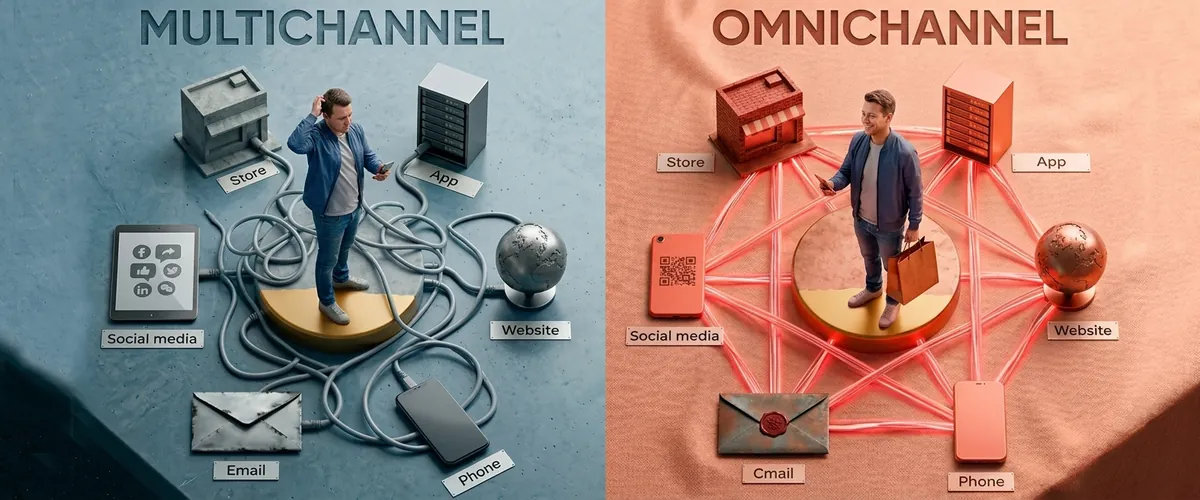
Having a website and a physical store does not make you omnichannel. Most merchants operate in multichannel mode without realizing it: each channel has its own payment rules, its own return policies and its own fraud logic. Data doesn’t flow across channels and accounting reconciliation becomes complicated.
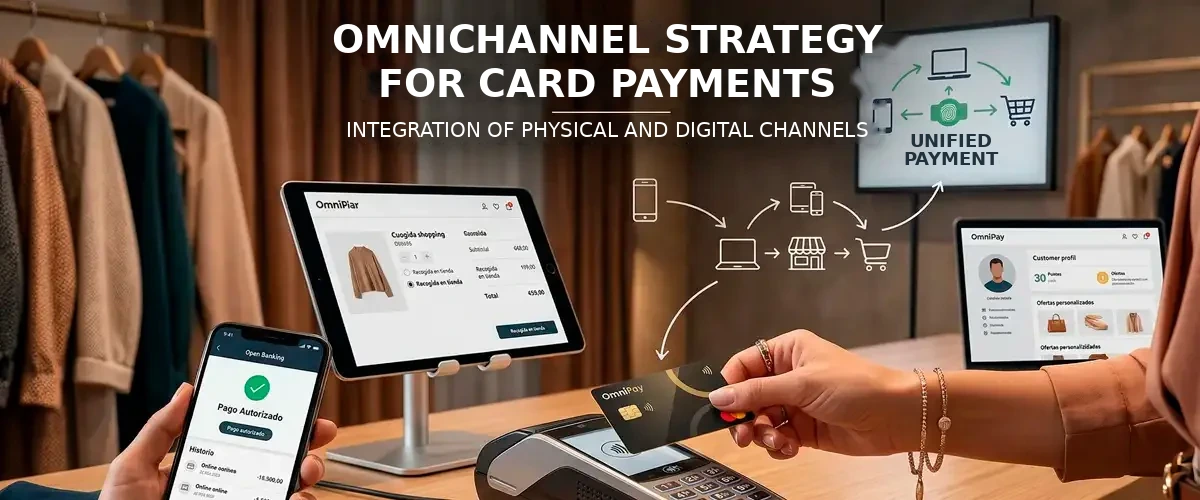
A real omnichannel strategy requires a common data core where the payment is the event that triggers everything: order preparation, inventory, invoicing and finance. The customer buys in the channel they prefer, pays with the method they want, returns where it’s convenient, and you see a single traceable transaction from start to finish.
The omnichannel stress test
There is one question that separates truly omnichannel merchants from the rest: can a customer buy online and return in the physical store without presenting the card again to receive the refund? If the answer is no, your channel integration is superficial.
For this to work, the token generated in the web transaction must be recognized by the physical terminal. That continuity requires what the industry calls unified commerce: a common authorization engine, a return policy that does not distinguish between channels, and a unique customer identifier. From a regulatory perspective, Directive (EU) 2015/2366 (PSD2) establishes the authentication obligations that apply equally to card‑present and card‑not‑present operations.
The real impact of an omnichannel strategy on conversion, cash flow and margin
When you unify channels, you unlock revenue that was previously isolated. In‑store pickup of online purchases drives physical traffic, generates impulse sales and eliminates shipping costs. Your digital channel breaks physical space limitations by showing the full catalogue, including products not in stock at the store.
In payment operations, this model requires that the online transaction settles correctly and that the POS system recognizes that purchase to manage pickup without friction. If your physical POS and online gateway operate as silos, every cross‑channel pickup or return becomes a manual process that consumes time and generates errors.
A unified payment engine produces a single settlement flow: fewer lines in bank reconciliation, fewer discrepancies and more reliable cash‑flow forecasting. For merchants with monthly volume above €50,000, the reduction in manual reconciliation time alone justifies the investment.
Technical architecture: how an omnichannel strategy works behind the scenes
The transactional engine: unified POS
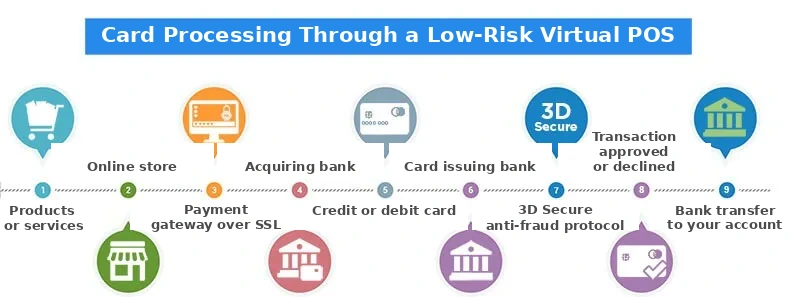
The core of any omnichannel payment strategy is a virtual POS that acts as a single engine for card‑present (CP) and card‑not‑present (CNP) operations. The technical flow follows these steps:
- The customer enters their payment details in the checkout (web, app or physical terminal).
- The POS encrypts that data and sends it to the acquiring institution.
- The acquirer forwards it to the card issuer.
- If the operation is valid, it is authorized and the merchant is notified.
- 3D Secure 2 (SCA under PSD2) is applied when the risk level requires it.
Integration with your e‑commerce platform is critical. There are plugins for WooCommerce, Shopify, Magento and PrestaShop. If your development is custom, you will need to connect via API. A good integration ensures the customer never feels they leave your website to pay. A poor one, redirecting to an outdated banking page, can drop your conversion by up to 20%.
Tokenization: the key to unified commerce
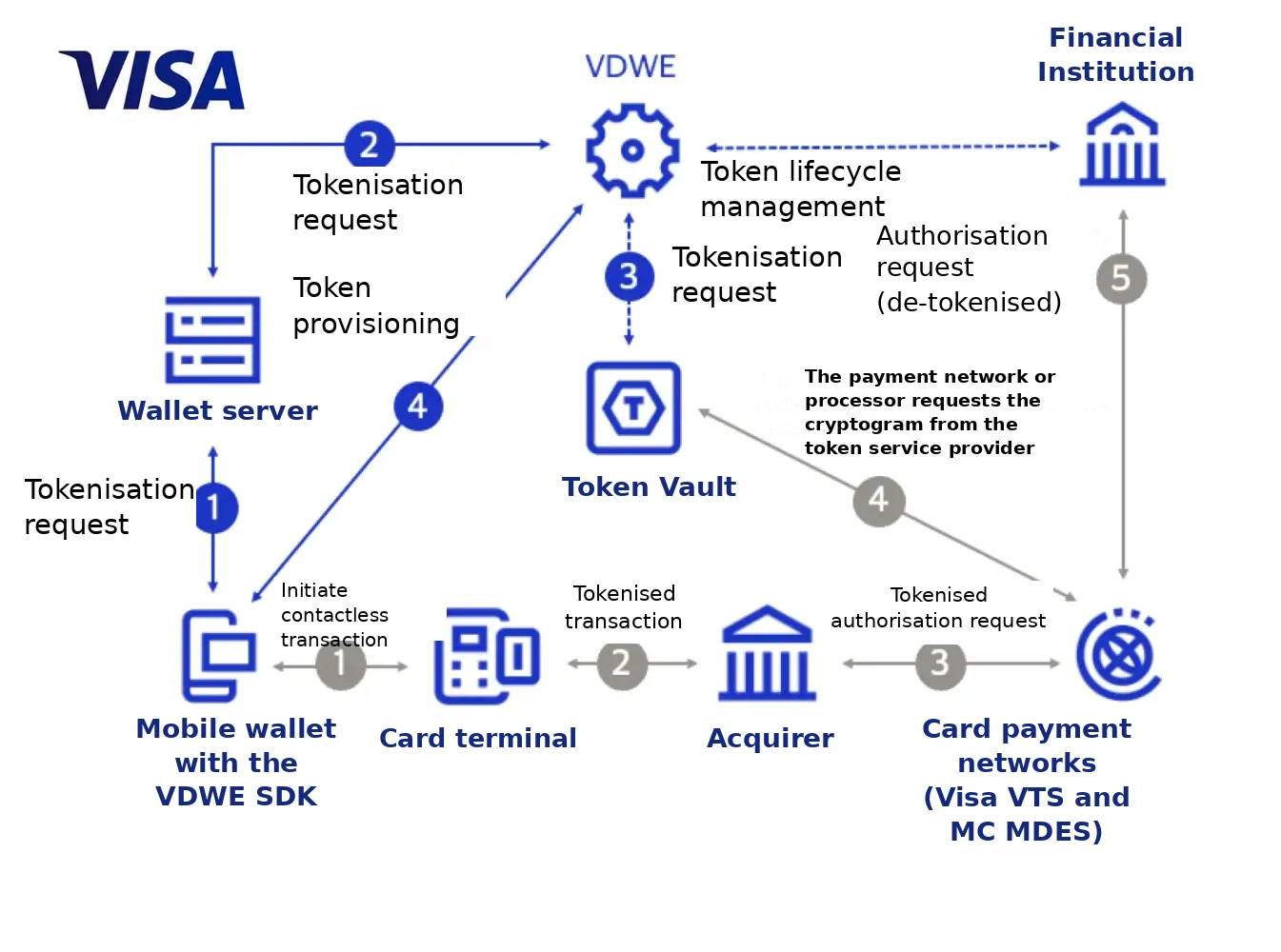
Tokenization replaces sensitive card data with a unique identifier (token) that does not expose the real number. It enables recurring payments, one‑click purchases and cross‑channel returns without the customer re‑entering their details.
The concept of a unified token is essential: the token generated in a web purchase also works on the store’s physical terminal. It enables a single customer view and allows cross‑channel returns to work without friction. In addition, issuers and networks trust the token context more, improving approval rates.
Regulatory compliance: PSD2, PCI DSS, 3D Secure and fraud prevention
PSD2 and Strong Customer Authentication (SCA)
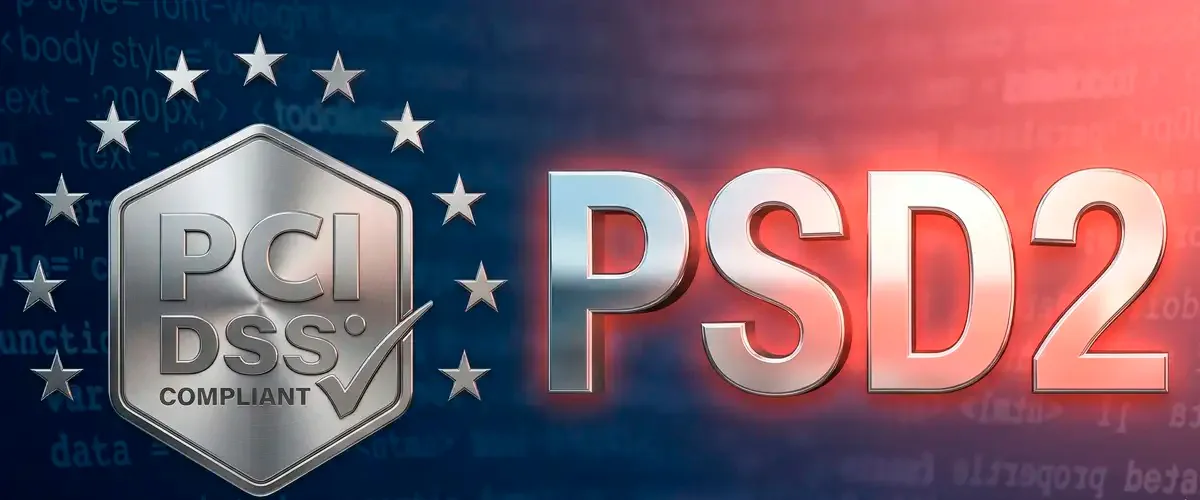
The PSD2 Directive requires Strong Customer Authentication (SCA) for most electronic payments in Europe. The payer must verify their identity with at least two of three factors: something they know (PIN), something they have (mobile), and something they are (fingerprint). The 3D Secure 2 protocol is the technical standard that performs this authentication in e‑commerce.
The regulation provides exemptions to reduce friction when risk is low:
- Low‑value transactions (up to €30 with cumulative limits).
- Transaction Risk Analysis (TRA) when fraud rates are below EBA thresholds.
- Merchant‑initiated transactions (MIT) such as pre‑authorized subscriptions.
Applying these exemptions intelligently is the difference between losing conversion due to friction or maintaining security without affecting sales.
Essential fraud controls
When channels are integrated, the risk surface expands. These controls must be active:
- Dynamic blocklists: BIN, IP, device or email with fraudulent history.
- Velocity checks: limits per card, amount and frequency within defined time windows.
- CVV and AVS validation: risk filtering for CNP operations.
- Clear descriptor: a recognizable name on the bank statement reduces confusion‑driven refunds.
- Hybrid monitoring: deterministic rules with human review for signals such as IP geolocation and address consistency.
The PCI DSS standard establishes the requirements for protecting card data. Tokenization reduces the scope of these obligations, but does not eliminate them: you must maintain encrypted connections and control access to transactional systems.
Omnichannel strategy in action: sector‑specific use cases
Retail and local commerce
Operational models that generate measurable results:
- In‑store pickup: the customer buys online and collects in the store. Generates additional foot traffic and eliminates shipping costs.
- Cross‑channel returns: returning in store items purchased online turns a negative experience into a sales opportunity.
- Extended catalogue: display on your website products that do not fit in the physical space and ship from central warehouse.

E‑commerce and hospitality
For digital businesses opening a physical location, the payment architecture must support SoftPOS terminals (the mobile phone as a POS), shared tokens between web and in‑store channels, and payment links via email for remote collections.
In hospitality, tokenization allows storing a secure card identifier during the reservation without holding sensitive data. If the guest does not show up, the penalty charge is executed on the token, reducing exposure to fraud.
Regulated PayFac acquiring vs. traditional banking: why the difference matters
Payment processing handles third‑party money, and that is regulated. When you work with an acquiring structure backed by a financial institution acting as a regulated acquirer, the flow is direct: authorization, capture, settlement and payout. Funds are safeguarded in Segregated Accounts as required by Bank of Spain regulations.
Operational advantages of this model:
- Predictable settlement: you know when and how much you will receive, with no opaque holds.
- Integrated compliance: PSD2, PCI DSS, AML/CFT and KYC/KYB handled directly by the infrastructure.
- Cost visibility: the IC++ model shows interchange, scheme fees and acquiring margin separately. A 0.2% difference means thousands of euros per year.
The Spanish market has particularities: Bizum has extremely high penetration, and excluding it from your omnichannel strategy means losing sales. Instant SEPA transfers and compatibility with major Spanish banks are requirements your acquirer must support natively.
The future of payments lies in regulated omnichannel
Merchants that continue treating their physical store and website as separate businesses will lose ground to those offering a unified experience. The technology exists and is mature. What’s missing is the decision to connect systems and choose a payment partner that understands real‑world operations.
If you want to evaluate your business’s payment infrastructure, the PayOk team can review your specific case. Contact us at Contact us form or via WhatsApp at +34 613 01 87 17.
It depends on your starting point. If you already have a virtual POS and a physical terminal, the work focuses on unifying both under a single transactional engine and enabling cross-channel tokenisation. For merchants billing between €50,000 and €250,000 per month, the investment usually pays for itself within the first quarter.
Yes. The major platforms have integration plugins for gateways that support tokenisation and omnichannel operations. The key point is that your payment provider offers a unified API covering both the in-person and the online channel.
Yes. PSD2 was transposed into Spanish law through Royal Decree-Law 19/2018. It applies to every electronic transaction where either the payer's or the payee's provider is located in the EU. Strong Customer Authentication (SCA) is mandatory unless a recognised exemption applies.
It improves both significantly. With a unified system, refunds are processed against the original token regardless of the channel the sale came through. That reduces errors, speeds up reimbursement and cuts the number of disputes that escalate into chargebacks.
Five priority metrics: approval rate by channel, effective cost per transaction broken down by component, chargeback ratio by reason code, percentage of customers using more than one channel, and average order value compared between single-channel and omnichannel customers.
Was this post useful?

Leave a Comment
Ready to get started?
Create your PayOk account in minutes. No maintenance fees, pay per transaction.