BIN number
What is a BIN number in a financial institution?
The BIN number (Bank Identification Number) corresponds to the first 6 to 8 digits of a card’s Primary Account Number (PAN). It identifies the issuing bank, the card brand (Visa, Mastercard, American Express), the product type (credit, debit or prepaid) and the country of issuance.
The ISO/IEC 7812 standard regulates BIN allocation. Since 2022, the industry expanded the standard from 6 to 8 digits (known as the IIN, Issuer Identification Number) to accommodate the growing demand for ranges from new issuers.
PCI DSS v4.0 Requirement 3.4.1 states that the BIN and the last four digits of the PAN are the maximum card data that can be displayed without masking. Any additional display requires a documented legitimate business need.
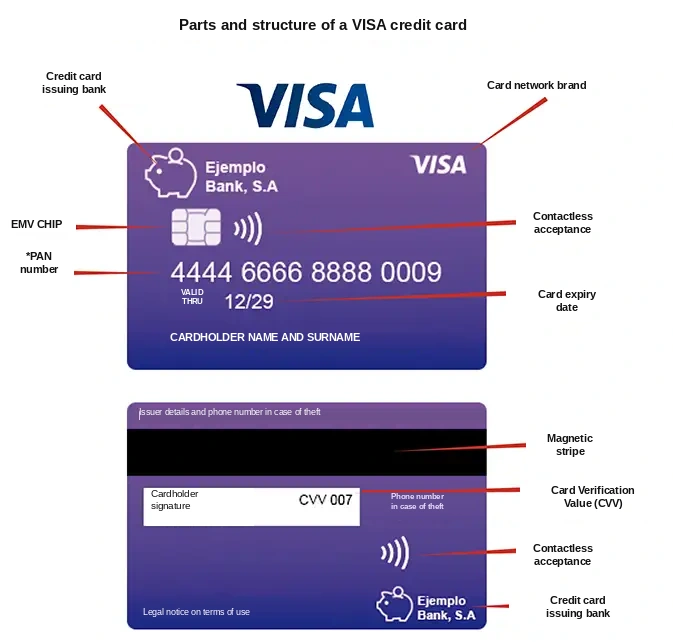 How the BIN number works
When a customer uses their card at a POS terminal or in an ecommerce checkout, the system reads the BIN to make decisions in milliseconds:
- Identification of scheme and issuer. The first digit (MII, Major Industry Identifier) reveals the network: Visa cards start with 4, Mastercard with 2 or 5, and American Express with 34 or 37. The remaining BIN digits identify the specific issuing bank.
- Transaction routing. The processor uses the BIN to direct the authorization request to the correct issuer through the appropriate network. Accurate routing reduces technical declines and improves the approval rate.
- Interchange fee classification. The BIN determines whether the card is consumer, commercial or corporate—information that directly affects the interchange fee the acquirer pays to the issuer.
- Fraud‑rule activation. Risk engines cross‑check the BIN with IP geolocation, shipping country and transaction history to calculate a real‑time risk score.
- Luhn algorithm validation. The last digit of the PAN is a check digit used to detect typing errors before sending the authorization request.
Regulatory impact and applicable security of the BIN number
The handling of BIN and PAN data is subject to strict regulation:
PCI DSS v4.0 requires protecting the full PAN in any entity that stores, processes or transmits it. Requirement 3.5.1 mandates making the PAN unreadable through encryption, truncation, tokenization or one‑way hashing. The BIN is exempt from masking when needed for routing.
PSD2 (transposed in Spain by Royal Decree‑Law 19/2018) requires Strong Customer Authentication (SCA) for electronic payments. The BIN plays a role because acquirer risk engines use it to evaluate whether a transaction qualifies for a TRA exemption (Transaction Risk Analysis) or requires 3D Secure 2.
Operational advantages and disadvantages
| Advantages | Disadvantages |
|---|---|
| Automatic routing that reduces technical declines | A misclassified BIN can cause unjustified declines |
| Granular fraud rules by issuer and country | BIN tables require constant updates |
| Accurate interchange fee classification | The expansion to 8 digits requires adapting legacy systems |
| Real‑time card‑type detection in checkout | Does not contain personal data about the cardholder |
Was this term useful?

Leave a Comment