Chargeback
What is a chargeback?
A chargeback is the forced reversal of a credit or debit card transaction, initiated by the issuing bank at the request of the cardholder. Unlike a voluntary refund, it triggers a formal dispute process regulated by the card schemes (Visa, Mastercard) and European payment services legislation.
For consumers, it is a protection mechanism against fraud or unauthorized charges. For merchants, it means losing the transaction amount, paying dispute fees and suffering a direct impact on their chargeback ratio.
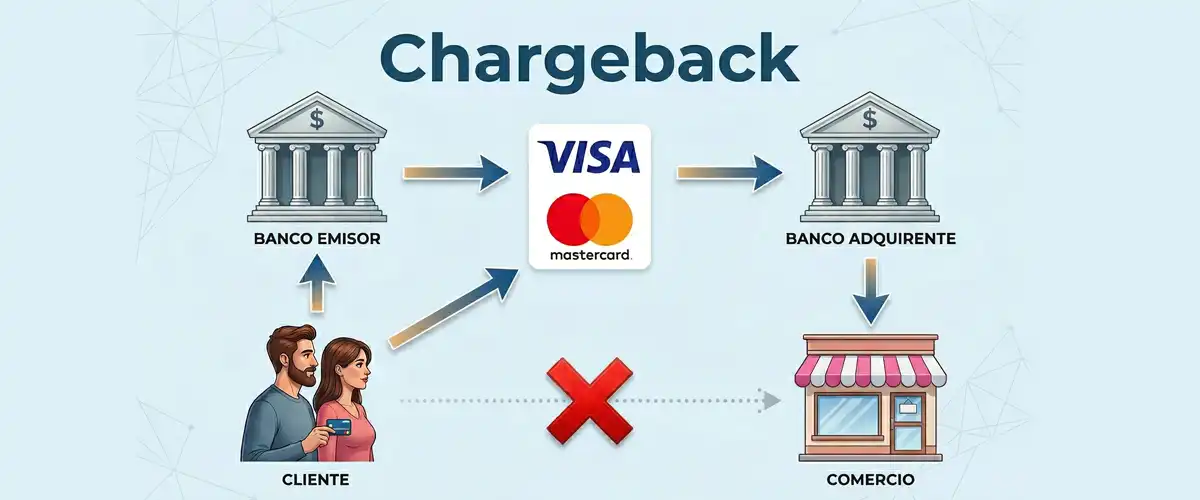
How a chargeback works
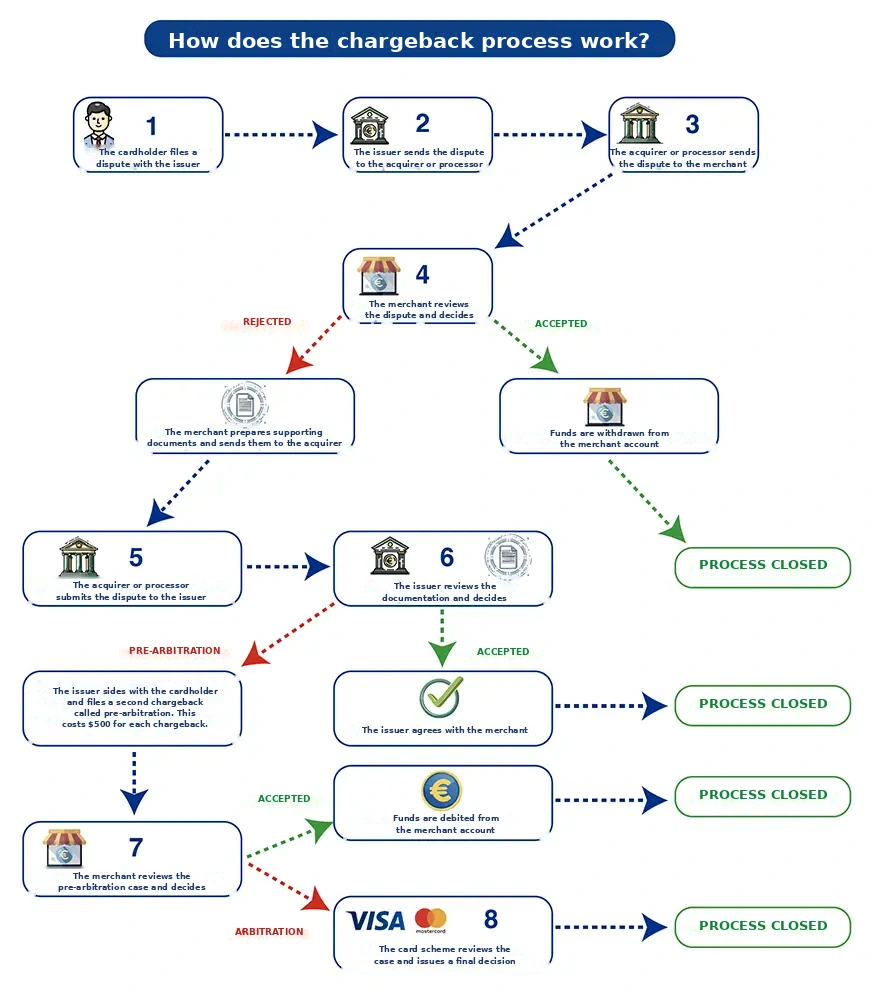
The chargeback process follows a structured flow with strict deadlines:
- Dispute initiation. The cardholder identifies an unrecognized charge and reports it to their issuing bank.
- Issuer evaluation. The bank assigns a Reason Code and withdraws the funds from the merchant’s account as a precaution.
- Notification to the acquirer. The scheme forwards the dispute to the acquiring bank, which informs the merchant of the reason, deadlines and required evidence format.
- Representment. The merchant either accepts the chargeback or submits evidence proving the transaction’s legitimacy: invoices, shipping tracking, 3D Secure authentication logs.
- Pre‑arbitration and arbitration. If the issuer rejects the evidence, the case escalates. The scheme reviews the file and issues a binding decision. Arbitration fees can reach 500 USD per case.
Cardholders typically have up to 120 days from the purchase date to initiate a dispute in most schemes. Some allow up to 365 days. The merchant’s speed during the representment phase is critical.
Regulatory impact and applicable security of chargebacks
The PSD2 Directive (transposed in Spain through Royal Decree‑Law 19/2018) regulates consumer protection in electronic payments and directly affects chargebacks:
- Liability limited to 50 €. For unauthorized transactions, the cardholder is liable only up to this amount unless there is gross negligence (Art. 46 RDL 19/2018).
- Immediate refund. The payment service provider must return the amount no later than the end of the next business day after notification (Art. 45 RDL 19/2018).
- Strong customer authentication (SCA). PSD2 requires two‑factor authentication for most electronic payments. Proper SCA triggers the liability shift: if a 3DS‑authenticated payment turns out to be fraudulent, the issuer—not the merchant—absorbs the loss.
- Visa VAMP program. A chargeback ratio above 0.65% places the merchant in the alert zone. Exceeding 0.9% may lead to penalties or loss of processing privileges.
Operational advantages and disadvantages
| For consumers | For merchants | |
|---|---|---|
| Advantages | Protection against fraud and unauthorized charges. Ability to recover funds without relying on the seller. | Incentive to maintain transparent processes and efficient post‑sales service. |
| Disadvantages | Slow process (30 to 90 days). Risk of losing rights if deadlines are |
Was this term useful?

Leave a Comment