E-Wallet
What is an E-Wallet in a card payment process?
An E-Wallet is an application that stores a user's payment credentials in an encrypted form to execute transactions without exposing actual card data. It operates through tokenization: it replaces the PAN (card number) with a unique token that is only valid within that specific environment.
Unlike a conventional gateway, the digital wallet acts as an intermediary layer between the cardholder and the merchant, reducing the fraud exposure surface.
How an E-Wallet works in payment processing
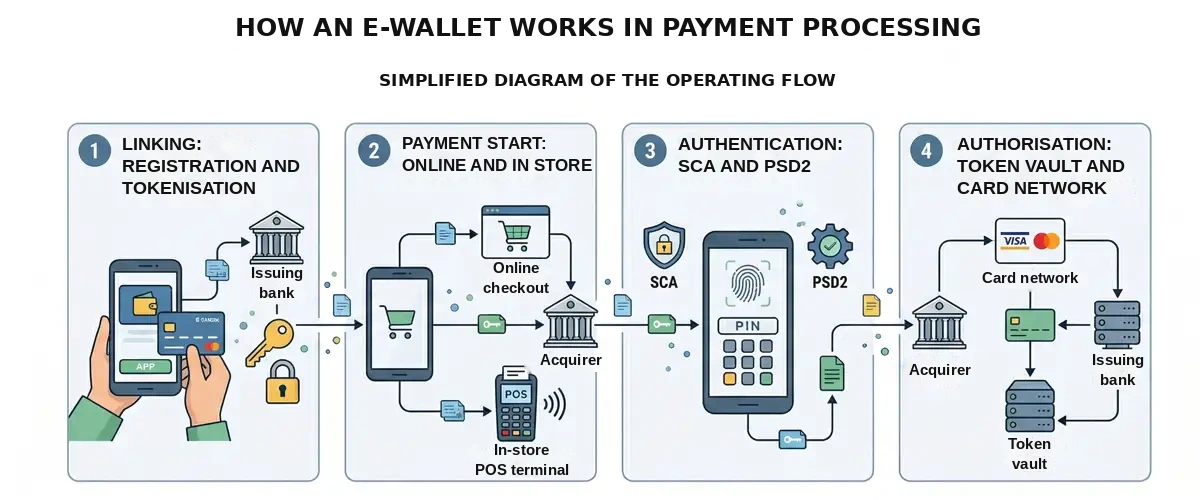
The operational flow of a digital wallet follows this architecture:
- Linking: The user registers their card. The E-Wallet verifies it with the issuer and generates a token associated with the device.
- Payment Initiation: In online checkout, the token is transmitted to the acquirer. At physical points of sale, NFC for contactless payments is used.
- Authentication: The device requests biometrics or a PIN, fulfilling the SCA (Strong Customer Authentication) requirements demanded by PSD2.
- Authorization: The acquirer sends the token to the card network. The token vault resolves it, identifies the real card, and the issuer authorizes the operation.
Tokenization within the E-Wallet prevents the merchant from storing the actual PAN, which drastically reduces the scope of PCI DSS compliance and minimizes the impact of a potential data breach.
Regulatory impact and applicable security of e-wallets
Every E-Wallet operating in the EEA complies with a demanding regulatory framework:
- PSD2 and SCA: Directive (EU) 2015/2366 mandates strong authentication for electronic payments. E-Wallets like Apple Pay or Google Pay integrate SCA natively through biometrics, without additional friction.
- PCI DSS v4.0: By employing end-to-end tokenization, the E-Wallet reduces the components subject to PCI assessment.
- AML/CFT and KYC: Electronic money issuing entities must apply customer identification and anti-money laundering prevention.
Operational advantages for e-commerce
Accepting payments via E-Wallet provides measurable benefits:
- Higher approval rate: Issuers trust tokenized transactions with valid cryptograms more, which reduces rejections.
- CNP fraud reduction: The device-linked token and biometrics eliminate the use of stolen cards. The 3DS + tokenization tandem reduces identity theft fraud.
- Lower cart abandonment: An E-Wallet checkout is completed in a single touch, without forms or waiting times.
Was this term useful?

Leave a Comment